


How to Repair a SUP Board: The 15 Most Common Questions Answered by the HaloSUP Team (Prep for the New Season)
Updated: Dec 16, 2025
How to repair a SUP board?
Every winter at HaloSUP, we get the most questions about how to repair SUP boards and winter storage of equipment. People write to us on Instagram, via e-mail, on Google – and interestingly, also through ChatGPT, where very similar questions keep appearing:
“Why is my SUP losing air?”
“How do I fix a small hole in my SUP?”
“How much does it cost to repair a SUP?”
“Can I repair my SUP at home?”
“How do I store my SUP properly over winter?”
We wrote this article to give clear answers to the 15 most common questions, using the exact procedures we use in the HaloSUP workshop. If you own an inflatable SUP and want it properly ready for the 2026 season, this is your best guide.
Popravilo sup deske Priprava dvokomponentnega lepila Svinga Čistilo nanesemo pred sup popravilom Milnica Industrijski fen
1) How do I find where my SUP is leaking?
The easiest and most reliable way:
Inflate your SUP to 12–15 PSI.
With a sponge, apply a mix of water + dish soap over all seams, around the valve and any suspicious spots.
Wherever you see bubbles forming, that’s where you have a micro hole or crack.
HaloSUP tip: A SUP most often starts leaking:
around the valve,
on edge seams,
where the board took a hit on rocks, shells or concrete,
or if it was left fully inflated in strong, direct sun for too long.
Very important warning: Never leave your SUP leaning against a hot metal railing, a boat guardrail, a container or a hot surface in full sun. The PVC overheats, the glue softens, and the SUP can literally blow out.
2) How can I repair my SUP if it has a small hole?
If the damage is smaller than 3–4 mm, you can do a small home repair:
Fully deflate the SUP.
Dry the surface thoroughly.
Degrease the area (alcohol or isopropanol).
Slightly roughen or open up the hole so the glue bonds better.
Do not use the tiny glue tube that came with the board – use a proper two-component PVC glue for dinghies/SUPs.
Let the applied glue dry for about 15 minutes.
Heat the glue gently with an industrial hot-air blower.
Press the glued surfaces together firmly (with a weight or clamps) and leave them to cure for 72 hours.
When this is NOT enough:
larger holes,
damaged seam,
the SUP still leaks after your repair →
Then it’s time to bring it to us.

3) Can I repair my SUP at home, or should I bring it to a repair service?
For home repairs, we recommend ONLY:
re-glueing lifted EVA deck pad (the non-slip top layer),
minor scratches and surface scuffs,
very small pinholes.
Your SUP should go to HaloSUP Repair if:
a seam is damaged or open,
there is a larger hole,
the valve is leaking,
the board won’t hold pressure,
it loses its shape even at 15 PSI (this is also a potential warranty case with the original seller).
Important note: If you repair your SUP yourself and it works – great. If it doesn’t, keep in mind: removing incorrectly applied glue is hard. It makes professional repair more difficult and lowers the chance of a 100% perfect result.
→ HALOSUP REPAIR – bring your SUP for inspection and professional repair. (link)
4) How much does SUP repair cost?
Typical price ranges at HaloSUP:
small damage: 45 €
tightening / re-sealing a valve: 25 €
seam repairs: 50–90 €
complex repairs: by agreement
We always inspect the board and give an estimate before we start.
5) How do I fix a valve that’s leaking?
Step by step:
Inflate the SUP.
Use the soapy water test around the valve.
With a valve wrench, gently tighten the valve.
If it still leaks → we replace the valve insert.
In around 80% of cases, a leak stops just by tightening the valve correctly. If not, we do the replacement here in the workshop.
6) What does a bubble or “bump” on the SUP mean?
That’s delamination – the PVC layers are separating.
Important: Do not use that SUP at 15 PSI. In this condition, repair is not possible in a way we would consider reliably safe.
7) Why is my SUP not holding air? (top 3 reasons)
Most common causes:
a micro or larger puncture
valve not sealing properly
damaged seam
That’s why we always do a pressure test combined with a soapy water test.
8) Which glue should I use for SUP repair?
The correct glue is a two-component PVC glue designed for inflatable boats and SUP boards.
Never use:
superglue (cyanoacrylate)
hot glue
fabric/textile glue
silicone
epoxy
HaloSUP note: The wrong glue can:
damage the PVC,
make future repairs almost impossible,
leave hard spots or ugly, stiff patches on your board.
9) How long does a SUP repair take?
Approximate timings:
minor repairs: 24 hours
larger repairs: 3–6 days
in peak summer season: up to 14 days
Winter is ideal: no rush, better curing conditions for glue, and more time for careful work.
10) Where can I repair my SUP in Slovenia?
If you are on or near the coast:
HALOSUP REPAIR – Izola / San Simon
If you are closer to the Karst region:
HaloSUP Repair – Ocizla (near Kozina)
We repair SUP boards of all brands and models – even heavily damaged ones.
11) How long do SUP repairs last?
A properly done repair can last many years.
It depends on:
quality of the glue,
good surface preparation,
proper cleaning/degreasing,
correct pressure and curing time.
In many cases, a good patch is actually stronger than the original PVC.
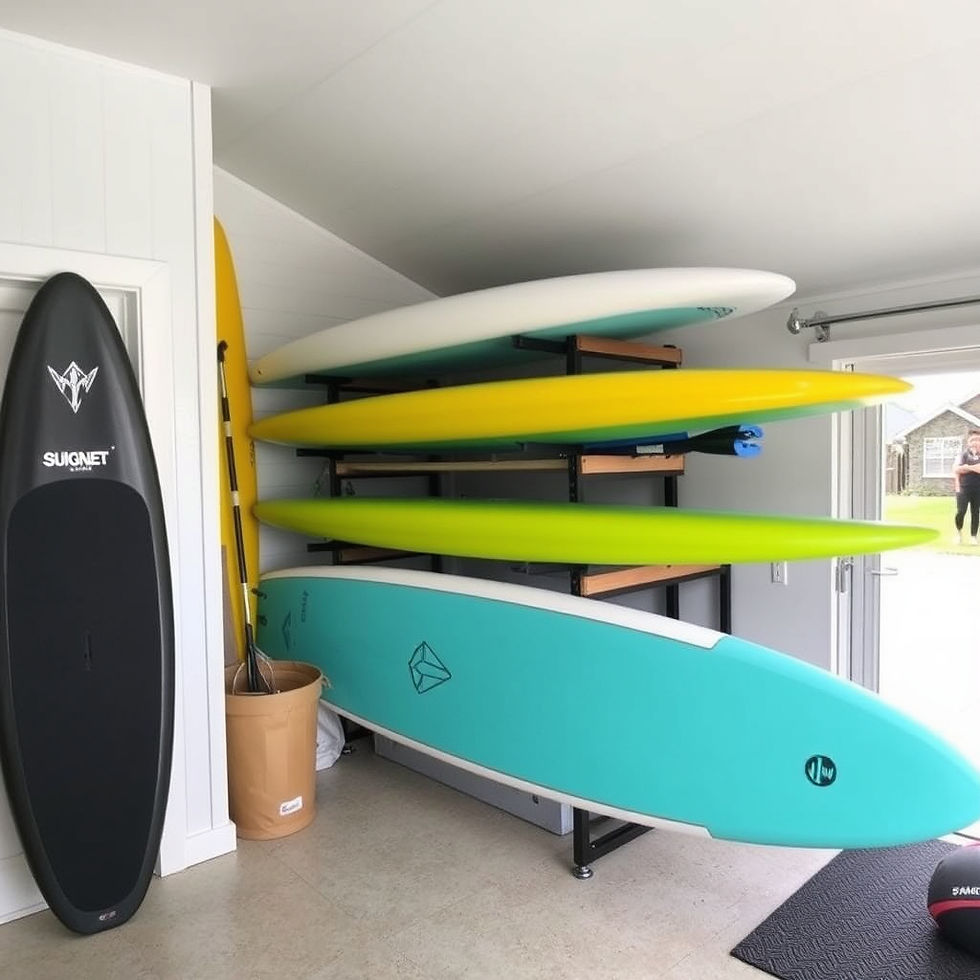
12) How should I store my SUP over winter? (HaloSUP method)
Our procedure:
We store SUPs half-inflated, so they keep their shape.
Always in dry, ventilated indoor spaces.
Never in temperatures below 0°C.
Valve closed.
Before storage, we wipe off salt and sand.
If we have enough room, we do not fold the board at all.
13) How do I prepare my SUP for the new season?
Before the first session of the season:
Inflate your SUP to around 12 PSI.
Check the valve.
Check all seams with soapy water.
Look for micro holes and scratches.
Check if the deck pad still has good grip.
If anything leaks → HaloSUP Repair.
14) Is it worth repairing a SUP, or should I buy a new one?
It depends on:
the age of the board,
the brand / original quality,
the type and size of the damage.
In most cases, repair is the smarter option, except when:
seams are heavily damaged in multiple places,
the SUP is very old (5+ years, low-end model),
the PVC itself is of very poor quality.
15) Why is it a good idea to bring your SUP to HaloSUP in winter?
Because in winter we:
have more time for detailed repairs,
can do a full inspection of your board,
work without peak-season pressure,
have shorter waiting times,
and your SUP is fully ready for May/June.
Conclusion: Help your SUP last many more seasons
SUP is an amazing sport.For your board to last, it needs:
correct storage,
careful handling,
timely repairs,
quality gluing work,
regular check-ups.
If your SUP is losing air, has a leaking valve, visible damage, or you simply want it professionally checked and ready for the new season:
Your board will be ready again for family trips, SUP sessions with your kids, dogs, and all your summer adventures.


Comments